 Skip to content
Introduction: Understanding IPTV
Why People Ask “What Is IPTV?”
The way people watch television has changed significantly over the past decade. Traditional cable and satellite TV are no longer the only options, and many viewers now encounter the term IPTV when looking for alternatives.
Because IPTV is often mentioned without explanation, it can feel confusing at first. People want to know what IPTV actually is, how it works, and how it differs from the television systems they already know. This guide is designed to answer those questions clearly, without technical jargon or sales language.
What Does IPTV Mean?
IPTV Meaning Explained in Simple Terms
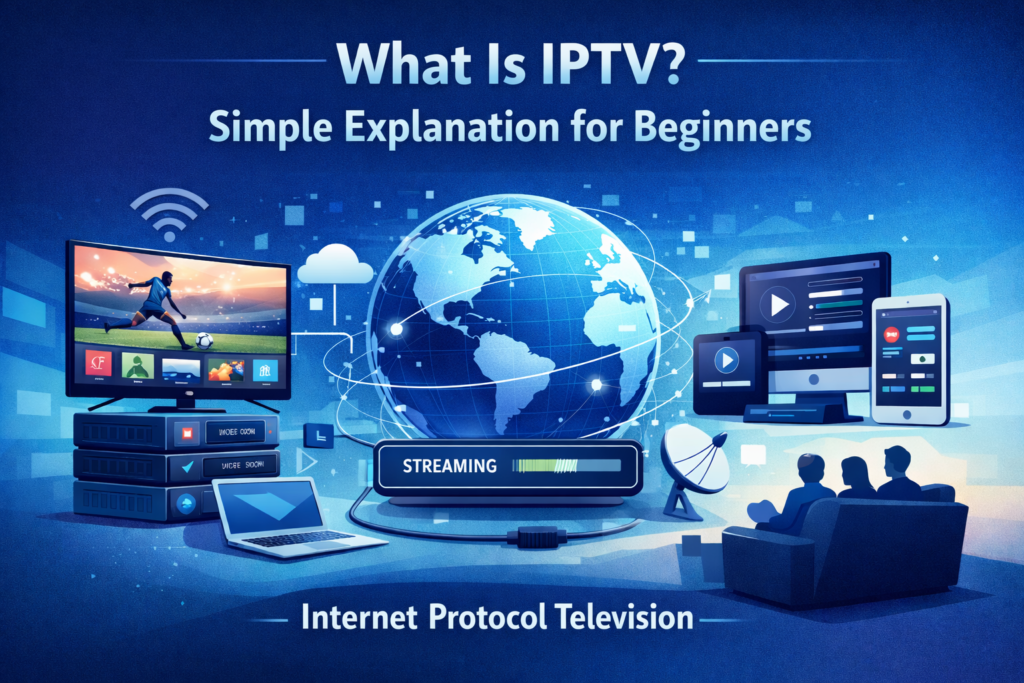
IPTV stands for Internet Protocol Television. In simple words, IPTV is a method of delivering television content through an internet connection instead of using traditional broadcast systems such as cable or satellite.
Rather than receiving TV channels through fixed signals that are broadcast continuously, IPTV sends television content as data over the internet. This data is streamed to the viewer only when it is requested or watched.
The term IPTV refers to the delivery system, not the type of content. Live TV channels, movies, and series can all be delivered through IPTV, just as they are through traditional television systems.
What IPTV Stands For
The “IP” in IPTV stands for Internet Protocol, which is the same set of rules used to send data across the internet. IPTV uses this protocol to transmit television content in a structured and controlled way.
This allows TV services to operate without relying on physical cable networks or satellite dishes, as long as a stable internet connection is available.
What Is IPTV in Practice?
IPTV as Internet-Based Television
In practice, IPTV functions as television delivered over the internet. When a viewer selects a channel or program, the content is streamed directly through an internet connection and displayed in real time.
This approach makes IPTV more flexible than traditional TV systems. Instead of broadcasting all channels at once, IPTV delivers only the content that is being watched, which allows for more efficient use of network resources.
Many people exploring IPTV are drawn to this flexibility, especially when looking for alternatives to fixed broadcast schedules. This broader approach to internet-based television is explained in more detail in our IPTV basics guide.
How IPTV Delivers TV Content
IPTV delivers content by sending small packets of data over the internet. These packets are received continuously and played back as video while the stream is still being delivered.
From the viewer’s perspective, this process feels similar to watching traditional TV. The difference lies in the delivery method, which relies on internet connectivity rather than broadcast infrastructure.
Why IPTV Exists
Limits of Traditional TV
Traditional television systems were built for a time when viewers had limited channel choices and followed fixed schedules. Cable and satellite TV broadcast the same content to everyone at the same time, regardless of whether it is being watched.
This model offers little flexibility and can be restrictive for viewers who want more control over their TV experience.
How Internet TV Changed Viewing Habits
As internet speeds improved, it became possible to deliver high-quality video online. Viewers began expecting more control, including the ability to watch content when it suits them and access a wider range of channels.
IPTV emerged to meet these expectations by combining the structure of traditional television with the flexibility of internet-based delivery. This shift has made IPTV particularly relevant for users exploring television options in iptv canada, where internet access is widely available.
IPTV vs Traditional Television (Brief)
IPTV vs Cable (High Level)
Cable TV delivers content through physical cables and continuously broadcasts all channels. IPTV, by contrast, sends content over the internet only when it is being watched.
This difference allows IPTV to offer more flexibility, while cable TV remains dependent on fixed infrastructure.
IPTV vs Satellite (High Level)
Satellite TV relies on signals transmitted from satellites to dishes installed at the viewer’s location. IPTV does not require satellite equipment and instead depends on internet connectivity.
While satellite TV can be useful in areas with limited internet access, IPTV is better suited for locations with stable broadband connections. A broader comparison of these systems is covered in the main IPTV basics guide.
What IPTV Is NOT
IPTV Is Not an App
A common misunderstanding is that IPTV refers to an application. In reality, IPTV is not an app.
Applications are simply tools used to access IPTV services. IPTV itself is the system that delivers television content over the internet, independent of how it is accessed.
IPTV Is Not the Same as Streaming Platforms
IPTV is also different from popular streaming platforms that focus mainly on on-demand content libraries.
While both use internet delivery, IPTV is designed to provide a television-style experience, including live channels, rather than operating solely as a collection of individual programs.
Is IPTV Easy for Beginners to Understand?
IPTV for Beginners
For beginners, IPTV may seem unfamiliar at first, but the underlying concept is simple. It is television delivered through the internet instead of traditional broadcast systems.
Once this idea is understood, using IPTV becomes much more intuitive.
What New Users Should Know
New users should focus on understanding what IPTV represents rather than worrying about technical details. IPTV systems are designed to function similarly to traditional TV, with channels and menus that are easy to navigate.
Many people researching the best iptv options start by learning the basics before exploring how different services operate.
FAQ: What Is IPTV?
What does IPTV stand for?
IPTV stands for Internet Protocol Television. It refers to delivering television content using internet-based networks rather than traditional broadcast systems.
Is IPTV the same as streaming?
No. Streaming is a general method of delivering video over the internet, while IPTV is a structured system designed to deliver television-style content, including live channels.
Do you need internet for IPTV?
Yes. IPTV relies entirely on an internet connection to deliver television content. Without internet access, IPTV services cannot function.
Conclusion
IPTV is a modern method of delivering television through the internet, offering an alternative to traditional cable and satellite systems. By understanding what IPTV means and how it functions, beginners can approach this technology with clearer expectations.
Learning the basics of IPTV is the first step before exploring how IPTV services are accessed, which devices support them, and how different platforms operate. A solid understanding of what IPTV is makes it easier to navigate the broader IPTV ecosystem with confidence.
