 Skip to content
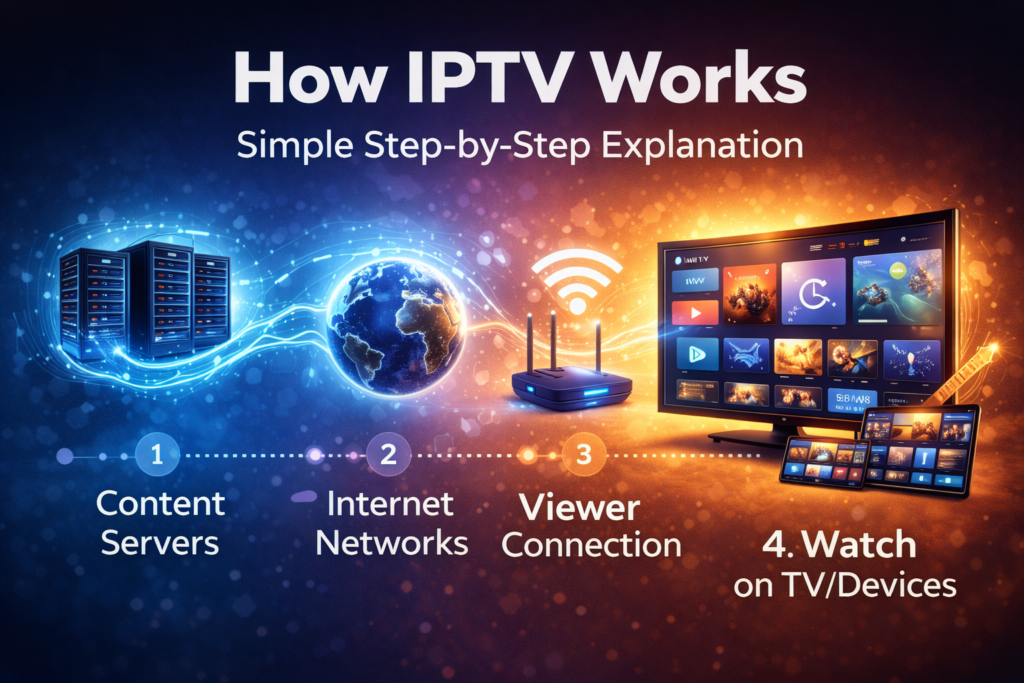
Introduction: Understanding How IPTV Works
Why People Want to Know How IPTV Works
After learning what IPTV is, the next logical question most people ask is how IPTV actually works. Unlike traditional television systems that rely on broadcast signals, IPTV uses internet-based delivery, which can feel unfamiliar at first.
Understanding how IPTV works does not require technical knowledge. It simply involves knowing how television content is delivered through the internet and what happens behind the scenes when you select a channel or program.
This guide explains the process step by step, using simple language and focusing on how IPTV functions from a viewer’s perspective.
How IPTV Delivers TV Content
Internet-Based TV Delivery Explained
IPTV delivers television content using an internet connection instead of cable lines or satellite signals. Rather than broadcasting all channels continuously, IPTV sends content only when it is requested or actively being watched.
Television channels and programs are converted into digital data and transmitted over the internet in a controlled stream. This data is received continuously and displayed on the screen as video, allowing viewers to watch content in real time.
This internet-based delivery model is what separates IPTV from traditional broadcast television systems.
Streaming TV Content in Real Time
With IPTV, content is streamed rather than downloaded. This means playback begins while the content is still being delivered, instead of waiting for an entire file to load.
The stream is sent as a steady flow of data that is processed and displayed instantly. As long as the internet connection remains stable, the viewing experience feels similar to watching traditional television.
This streaming approach allows IPTV to support both live channels and on-demand content using the same delivery framework.
What Happens When You Select a Channel
Requesting Content Over the Internet
When you select a channel or program on an IPTV service, a request is sent through the internet to retrieve that specific content.
Instead of receiving all channels at once, the system responds only to your selection. This request-based delivery is one of the key differences between IPTV and broadcast television.
How the Stream Reaches Your Screen
Once the request is made, the IPTV system begins sending a continuous stream of video data to your connection. This data arrives in small pieces and is processed immediately so the video can play smoothly.
From the viewer’s point of view, this entire process happens almost instantly. The channel appears on the screen just as it would with cable or satellite TV, even though the delivery method is completely different.
Live TV vs On-Demand IPTV Delivery
How Live IPTV Works
Live IPTV delivers television channels in real time, following the same schedules as traditional TV broadcasts. News, sports, and live shows are streamed as they happen.
The difference is that live IPTV streams are delivered over the internet only when a viewer is watching, rather than being broadcast continuously to everyone.
How On-Demand IPTV Works
On-demand IPTV allows viewers to choose content and watch it whenever they want. Instead of following a fixed schedule, programs are stored and made available for selection.
When a viewer chooses an on-demand program, it is streamed over the internet and can usually be paused, resumed, or replayed. This flexibility is one of the reasons many people explore iptv as an alternative to traditional television.
How IPTV Differs From Traditional Broadcasting
Broadcast TV Delivery Model
Traditional television systems broadcast the same signal to all viewers at the same time. Whether a channel is being watched or not, it is continuously transmitted through cable lines or satellite signals.
This model offers limited flexibility and does not adapt to individual viewing choices.
IPTV On-Demand Delivery Model
IPTV works on a request-based model. Content is delivered only when a viewer selects it, making the system more efficient and flexible.
This difference in delivery explains why IPTV can combine live television and on-demand viewing within the same system, something traditional broadcasting was not designed to do.
A broader overview of these differences is covered in the IPTV basics guide, which explains how IPTV fits into the wider television landscape.
Why IPTV Relies on Internet Connectivity
Continuous Data Streaming
IPTV depends on continuous data streaming to deliver video smoothly. Instead of sending content in one large file, IPTV streams data in small pieces that are played as they arrive.
This continuous flow allows viewers to start watching immediately while the rest of the content continues to stream in the background.
Real-Time Playback Explained
Because IPTV relies on real-time data delivery, the viewing experience depends on the stability of the internet connection rather than on broadcast signal strength.
In regions with reliable broadband access, such as many parts of iptv canada, this delivery method makes IPTV a practical and flexible way to watch television.
Is IPTV Complicated to Understand?
IPTV Explained for Non-Technical Users
For non-technical users, IPTV may sound complex at first, but the concept is straightforward. It is simply television delivered through the internet instead of traditional broadcast systems.
Once this idea is understood, the way IPTV works becomes much easier to grasp.
What Viewers Should Know
Viewers do not need to understand technical details to use IPTV. The system is designed to function in a familiar way, with channels and programs that behave much like traditional television.
Understanding how IPTV works conceptually helps users feel more confident when exploring different IPTV services later on.
FAQ: How IPTV Works
How does IPTV work in simple terms?
IPTV works by streaming television content over the internet instead of broadcasting it through cable or satellite. Content is delivered only when it is selected by the viewer.
Does IPTV stream live TV?
Yes. IPTV can stream live television channels in real time, following the same schedules as traditional TV, but using internet delivery instead of broadcast signals.
Does IPTV work the same as cable TV?
No. Cable TV broadcasts all channels continuously, while IPTV delivers content on demand through an internet connection. This difference allows IPTV to be more flexible.
Conclusion
IPTV works by delivering television content through the internet using a request-based streaming model. Instead of broadcasting all channels at once, IPTV sends only the content that is being watched, making the system more adaptable to modern viewing habits.
By understanding how IPTV works, viewers can better appreciate how internet-based television differs from traditional broadcast systems. This knowledge also makes it easier to evaluate what defines the best iptv experience when exploring different television options.
