 Skip to content
Introduction: Understanding the Types of IPTV Service
Why IPTV Comes in Different Service Types
IPTV is not a single, fixed way of watching television. Instead, it includes several service types designed to match different viewing habits.
Some viewers prefer watching television as it airs, while others want the freedom to watch content whenever it suits them. IPTV supports these preferences by offering multiple service types within the same internet-based delivery system.
Understanding these service types helps clarify how IPTV works in practice and why it feels more flexible than traditional television.
What Are IPTV Services?
IPTV Services Explained Simply
IPTV services refer to the different ways television content can be delivered and accessed through an internet connection.
Rather than broadcasting all content continuously, IPTV services organize content based on how and when it is watched. These services generally fall into a few main categories, each designed for a specific viewing style.
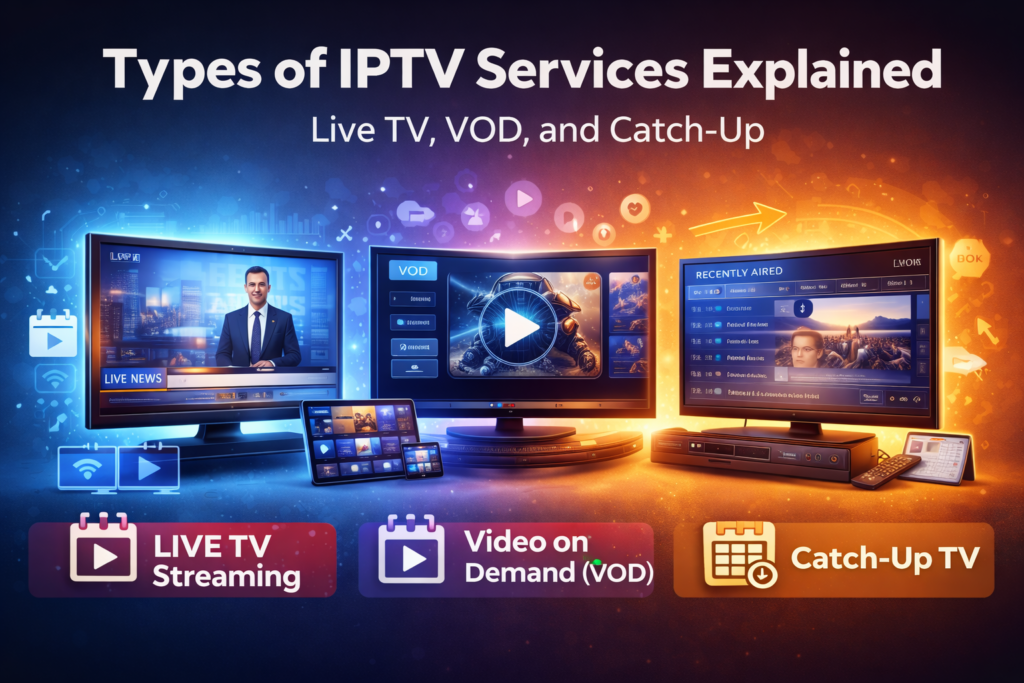
The most common IPTV service types are live TV, video on demand, and catch-up TV.
Live TV IPTV Services
What Live IPTV Means
Live IPTV delivers television channels in real time, following the same schedules as traditional broadcast television.
When a viewer selects a live channel, the content is streamed over the internet as it is being aired. News programs, live events, and scheduled shows are delivered without delay, just as they would be through cable or satellite TV.
The key difference is that live IPTV streams are sent only when a viewer is actively watching, rather than being broadcast to everyone at once.
When Live IPTV Is Used
Live IPTV is typically used when viewers want to watch events as they happen or follow scheduled programming.
It is especially relevant for viewers who prefer the structure of traditional television but want to access it through internet-based delivery instead of broadcast infrastructure.
Video on Demand (VOD) IPTV Services
What VOD Means in IPTV
Video on Demand, often referred to as VOD, allows viewers to select and watch content whenever they choose.
Instead of following a broadcast schedule, VOD content is stored and made available for playback on request. When a viewer selects a program, it is streamed over the internet and can usually be paused, resumed, or replayed.
This service type gives viewers full control over when they watch specific programs.
How On-Demand Viewing Works
With on-demand IPTV services, content is accessed individually rather than as part of a live schedule.
This makes VOD ideal for viewers who prefer flexibility and want to watch programs at their own pace rather than at a fixed broadcast time.
Catch-Up TV IPTV Services
What Catch-Up TV Is
Catch-up TV is an IPTV service type that allows viewers to watch programs that have already been broadcast.
Instead of recording content manually, catch-up services make previously aired shows available for a limited period of time after their original broadcast.
This allows viewers to watch content they missed without relying on live viewing.
How Catch-Up Differs From VOD
While catch-up TV and VOD may appear similar, they serve different purposes.
Catch-up TV focuses on recently aired programs and is tied to broadcast schedules, while VOD offers a broader selection of content that can be accessed independently of when it originally aired.
Time-Shifted IPTV Services
What Time-Shifted Viewing Means
Time-shifted IPTV services allow viewers to watch television content at a different time than it was originally broadcast.
This can include pausing live TV, restarting a program from the beginning, or watching a broadcast shortly after it has aired.
How Time-Shifted Services Fit Into IPTV
Time-shifted viewing bridges the gap between live TV and on-demand content.
It gives viewers more flexibility while still maintaining a connection to scheduled programming, making it a useful addition to IPTV service offerings.
Key Differences Between IPTV Service Types
Live vs On-Demand IPTV
The main difference between live IPTV and on-demand IPTV is timing.
Live IPTV follows a fixed schedule and delivers content as it airs, while on-demand IPTV allows viewers to choose content and watch it at any time.
Scheduled vs Flexible Viewing
Some IPTV canada services are designed around scheduled viewing, while others focus on flexibility.
By combining different service types, IPTV allows viewers to balance real-time television with on-demand access in a single system. A broader explanation of how this delivery model works is available in the How IPTV Works guide.
Which IPTV Service Type Is Right for Different Viewers?
Viewing Preferences Explained
Different IPTV service types suit different viewing preferences.
Some viewers prefer the familiarity of live TV, while others value the freedom of on-demand or catch-up viewing. IPTV accommodates these preferences by offering multiple service types within the same framework.
How Users Typically Combine IPTV Services
In practice, IPTV services are often used together.
Viewers may watch live channels for scheduled programs while relying on VOD or catch-up services for flexibility. This combination is part of what makes iptv appealing as a modern television solution.
How IPTV Services Fit Into the Bigger Picture
IPTV service types are best understood as part of a larger system of internet-based television.
A complete overview of IPTV concepts, including how services are delivered and how they compare with traditional TV, is available in the IPTV Basics guide. For a step-by-step explanation of delivery, the How IPTV Works article provides additional context.
FAQ: Types of IPTV Services
What types of IPTV services exist?
The main types of IPTV services are live TV, video on demand (VOD), catch-up TV, and time-shifted viewing.
Is live IPTV the same as cable TV?
No. While live IPTV follows broadcast schedules, it delivers content over the internet and only when it is being watched, unlike cable TV which broadcasts continuously.
Can IPTV include both live and on-demand content?
Yes. IPTV systems often combine live TV, VOD, and catch-up services to offer flexible viewing options within a single platform.
Conclusion
IPTV services are designed to support different ways of watching television, from live broadcasts to fully on-demand viewing.
By understanding the types of IPTV services available, viewers can better appreciate how internet-based television adapts to modern viewing habits. This flexibility is one of the key reasons IPTV continues to grow as an alternative to traditional television systems.
