 Skip to content
What Are IPTV Devices?
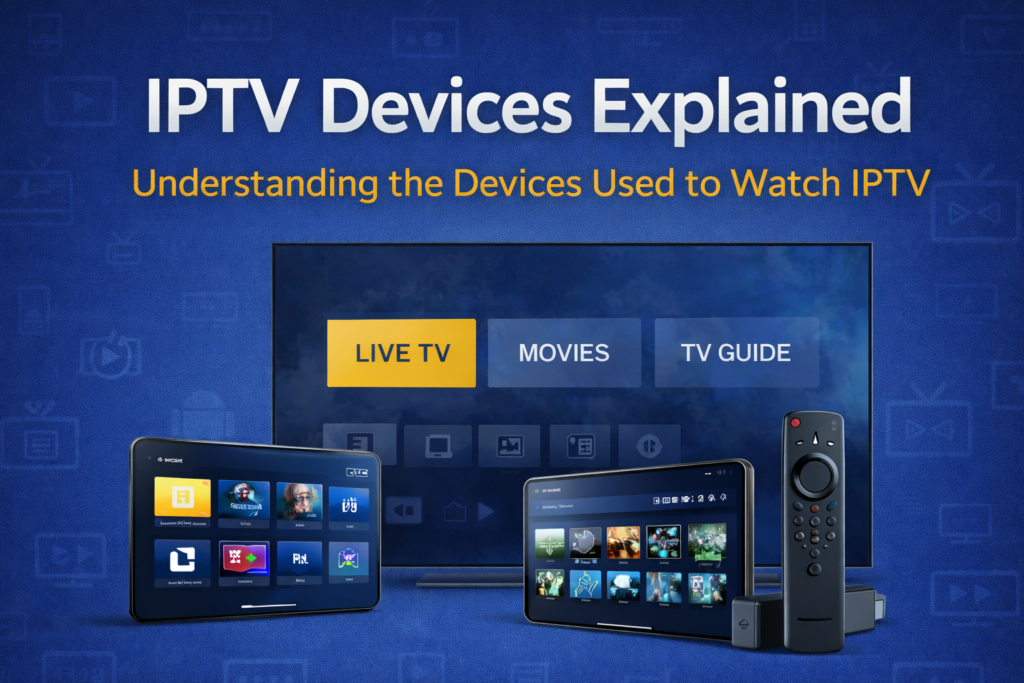
IPTV devices are the hardware used to watch television content delivered over the internet. In simple terms, they are the physical devices that receive IPTV streams and display them on a screen.
Unlike traditional television systems, which rely on cable connections or satellite dishes, IPTV depends on internet connectivity. Because of this, IPTV does not require a specific type of television hardware. Instead, it works on devices that are capable of connecting to the internet and running software that can display video content.
An IPTV device does not provide television channels on its own. Its role is to act as the platform on which IPTV content is accessed, processed, and viewed. The quality of the IPTV experience—such as stability, responsiveness, and ease of use—is often influenced by the device being used.
It is important to understand that IPTV devices are not defined by brand or model, but by category. A Smart TV, a streaming stick, a TV box, or even a computer can all function as IPTV devices, as long as they meet the basic requirements to receive and display internet-based video streams.
This distinction helps explain why IPTV can feel smooth and reliable on one device, while feeling slow or unstable on another. The device itself plays a central role in how IPTV content is experienced.
Why the Device You Use Matters for IPTV
The device used to watch IPTV has a direct impact on how reliable and enjoyable the experience feels. While IPTV content is delivered over the internet, the device plays a major role in how that content is processed and displayed.
Different devices vary in processing power, memory, operating systems, and long-term software support. These differences affect how smoothly channels load, how quickly menus respond, and how stable playback remains during extended viewing.
Many users assume that IPTV performance depends only on the internet connection or the IPTV subscription itself. In reality, the device often becomes the limiting factor. An underpowered or outdated device may struggle to handle IPTV streams efficiently, even with a fast internet connection.
Ease of use is another important factor. Some devices are designed for long viewing sessions on a television screen, while others are optimized for short sessions or touch-based navigation. Using a device that does not match how IPTV is typically watched can make the experience feel awkward or frustrating.
Understanding the role of the device helps explain why IPTV can work perfectly for one user and poorly for another, even when both are using the same IPTV service. Choosing the right type of device reduces common issues such as lag, crashes, or confusing navigation.
Main Categories of IPTV Devices
IPTV devices can be grouped into distinct categories based on how they are designed and how they are typically used. Each category offers a different balance between simplicity, flexibility, and performance.
Rather than focusing on specific brands or models, it is more useful to understand these categories and what they are generally suited for.
Smart TVs
Smart TVs are televisions with built-in internet connectivity and software platforms that allow apps to run directly on the TV.
They offer a convenient way to watch IPTV without additional hardware. However, Smart TVs often have limited processing power and restricted software environments, which can affect performance and long-term compatibility.
Smart TVs are best understood as self-contained IPTV devices, where convenience is prioritized over flexibility.
Streaming Devices (Firestick, Android TV, and Similar)
Streaming devices are small external devices that connect to a television and provide a dedicated operating system optimized for streaming.
These devices are generally more powerful and flexible than Smart TV platforms. They receive regular updates and are designed specifically for media playback, making them a common choice for IPTV users.
Streaming devices act as a middle layer between the TV and IPTV content, often improving stability and usability.
Android TV Boxes
Android TV boxes are standalone hardware devices built specifically for running Android-based applications on a television.
They typically offer more processing power and storage than streaming sticks, which can be useful for users who want greater control or run multiple apps. However, quality varies significantly depending on the manufacturer.
Android TV boxes represent a more open and customizable category of IPTV devices.
Mobile Devices and Tablets
Smartphones and tablets can also function as IPTV devices, allowing users to watch IPTV on the go.
These devices are well suited for short viewing sessions and personal use. However, screen size and battery consumption make them less ideal for extended viewing compared to television-based devices.
Mobile devices prioritize portability over comfort.
Computers and Laptops
Computers and laptops can be used to watch IPTV through software applications or web-based players.
They offer flexibility and processing power but are not always optimized for a living-room viewing experience. Using a keyboard and mouse for TV-style navigation can feel less natural for some users.
Computers are best viewed as versatile but non-specialized IPTV devices.
Strengths and Limitations of IPTV Device Types
Each category of IPTV device comes with its own strengths and limitations. Understanding these tradeoffs is more useful than looking for a single “best” device, because IPTV usage varies from person to person.
Some devices prioritize simplicity and convenience, while others focus on flexibility and performance. Devices designed for television viewing tend to offer a more comfortable experience for long sessions, while portable devices favor accessibility over immersion.
Cost is another factor. Built-in Smart TV solutions reduce the need for extra hardware, but external devices often provide better long-term performance and software support. Choosing between these options involves balancing ease of use, stability, and how much control the user wants.
Recognizing these tradeoffs helps avoid unrealistic expectations and explains why no single device category is ideal for every situation.
How to Choose the Right IPTV Device
Choosing the right IPTV device is less about specifications and more about matching the device to how IPTV will be used. Instead of focusing on brands or technical details, it is more effective to consider a few practical questions.
Based on Viewing Style
Users who mainly watch live television for extended periods often benefit from devices designed for television screens and remote control navigation. Those who watch occasionally or prefer on-demand content may prioritize convenience over performance.
Based on Technical Comfort
Some IPTV devices require minimal interaction once set up, while others offer more customization and control. Users who prefer simplicity may benefit from devices with limited configuration options, while more experienced users may prefer devices that allow deeper control.
Based on Existing Equipment
In many cases, the best IPTV device is the one that integrates most easily with what is already available. Adding a dedicated streaming device can significantly improve the experience without replacing existing hardware.
For users who want direct comparisons and recommendations, this decision process is explored further in our Best IPTV Device guide.
Common Mistakes When Choosing an IPTV Device
Many IPTV issues originate from device-related decisions rather than from the IPTV service itself. One common mistake is relying entirely on built-in Smart TV platforms without considering their limitations.
Another frequent issue is choosing low-quality or underpowered devices, which can lead to slow navigation, instability, or compatibility problems. Users may also expect mobile devices to replace a full television experience, which often results in discomfort during long viewing sessions.
Avoiding these mistakes helps ensure that IPTV performs reliably and remains easy to use over time.
IPTV Devices vs IPTV Apps
IPTV devices and IPTV apps serve different purposes and should not be confused.
An IPTV device is the hardware used to watch IPTV, while an IPTV app is the software that runs on that device to display IPTV content. Both are required for IPTV to function, but they address different aspects of the experience.
Understanding this distinction prevents confusion and helps users make better decisions when improving or troubleshooting their IPTV setup. For a deeper explanation of IPTV software, see our guide on best IPTV Apps.
IPTV Devices FAQ
Can I watch IPTV directly on my TV?
Yes, IPTV can be watched directly on many televisions. However, the experience depends on the TV’s software capabilities and performance.
Do I need a special device for IPTV?
IPTV does not require a special device, but using a device designed for streaming can significantly improve stability and ease of use.
Is a streaming device better than a Smart TV for IPTV?
In many cases, streaming devices offer better performance and flexibility than built-in Smart TV platforms, especially over time.
Conclusion: Understanding IPTV Devices
IPTV devices play a central role in how internet-based television is experienced. While IPTV Canada services deliver the content, the device determines how smoothly that content is accessed, displayed, and controlled.
There is no single IPTV device that is best for everyone. The right choice depends on viewing habits, comfort with technology, and existing equipment. By understanding the main device categories and their tradeoffs, users can make informed decisions without unnecessary complexity.
