 Skip to content
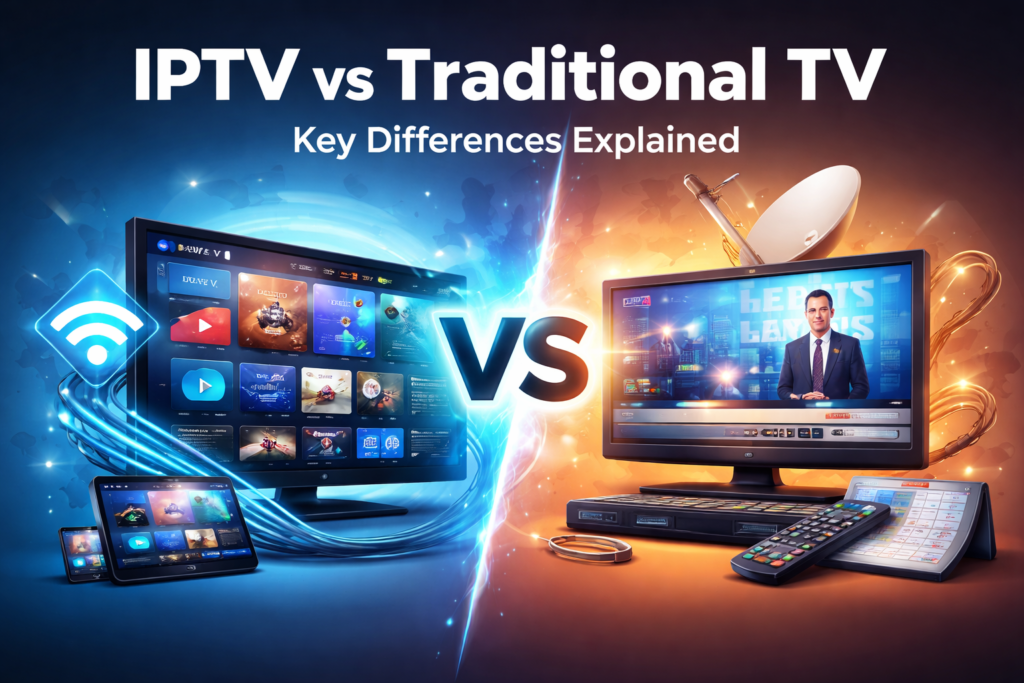
Introduction: Why Compare IPTV vs Traditional TV
Why This Comparison Matters to Viewers
As television technology evolves, many viewers encounter IPTV alongside traditional options such as cable and satellite TV. While both approaches deliver television content, they rely on very different systems and viewing models.
Understanding how IPTV differs from traditional television helps clarify what changes for the viewer and what remains the same. This comparison is not about choosing one option over another, but about explaining how each system works and how they fit different viewing habits.
What Is Traditional Television?
How Cable TV Works (High Level)
Cable television delivers TV channels through physical cable infrastructure. All channels are broadcast continuously through the network, regardless of whether they are being watched.
Viewers tune into a channel that is already being transmitted, following fixed schedules determined by broadcasters. This broadcast-based model has been the foundation of television for decades.
How Satellite TV Works (High Level)
Satellite television delivers TV content through signals transmitted from satellites to a dish installed at the viewer’s location.
Like cable TV, satellite television broadcasts channels continuously according to scheduled programming. The viewer receives the signal as long as the dish has a clear connection to the satellite.
How IPTV Differs From Traditional TV
Internet Delivery vs Broadcast Signals
The main difference between IPTV and traditional TV lies in how content is delivered.
Traditional television systems broadcast the same signal to everyone at the same time. IPTV, by contrast, delivers television content over the internet and sends it only when a viewer selects a channel or program.
This request-based delivery model is a defining characteristic of IPTV.
On-Demand vs Continuous Broadcasting
Traditional TV operates on continuous broadcasting. Channels are always being transmitted, whether or not they are actively being watched.
IPTV subscription works differently. Content is streamed on demand, meaning it is delivered only when requested. This allows IPTV to combine live television and on-demand viewing within the same system.
Viewing Experience Differences
Flexibility and Control
One of the most noticeable differences for viewers is flexibility.
Traditional television follows fixed schedules, while IPTV allows viewers more control over how and when they watch content. Even live IPTV streams are delivered through an on-demand system, which changes how viewers interact with television.
This flexibility is a key reason many people explore iptv as an alternative to traditional broadcast systems.
Location and Access Considerations
Traditional TV services are often tied to a fixed location, relying on physical infrastructure such as cables or satellite dishes.
IPTV relies on internet connectivity, which makes access less dependent on broadcast infrastructure and more adaptable to different environments, as long as a stable internet connection is available.
IPTV vs Cable TV (Direct Comparison)
Delivery Method Differences
Cable TV broadcasts all channels continuously through cable networks. IPTV delivers content over the internet and sends only the channel or program being watched.
This difference affects how efficiently content is delivered and how flexible the system can be.
Viewing Structure Differences
Cable TV is structured around fixed programming schedules. IPTV allows viewers to interact with content more freely, even when watching live channels.
Despite these differences, both systems aim to deliver a familiar television experience.
IPTV vs Satellite TV (Direct Comparison)
Infrastructure and Signal Dependence
Satellite TV depends on satellite signals and requires a dish with a clear line of sight. Weather and physical obstructions can sometimes affect reception.
IPTV does not rely on satellite signals and instead uses internet connectivity to deliver content.
Environmental and Location Factors
Satellite TV can be effective in areas with limited internet access, while IPTV is better suited to locations with reliable broadband connections.
In regions such as iptv canada, where high-speed internet is widely available, IPTV offers a practical alternative to satellite-based television.
When Traditional TV May Still Make Sense
Fixed Viewing Preferences
Some viewers prefer a simple, fixed television experience without interacting with menus or on-demand features.
For these users, traditional TV systems can still be a suitable choice.
Limited Internet Availability
In areas where internet connectivity is unstable or unavailable, traditional broadcast television may provide a more consistent viewing experience.
This highlights that IPTV and traditional TV can coexist rather than compete directly.
How IPTV Fits Into Modern TV Viewing
IPTV is best understood as part of a broader shift toward internet-based television delivery.
A complete overview of IPTV concepts, including how it works and how different service types fit together, is available in the IPTV Basics guide.
FAQ: IPTV vs Traditional TV
Is IPTV the same as cable TV?
No. Cable TV broadcasts all channels continuously, while IPTV delivers content over the internet only when it is selected by the viewer.
Does IPTV replace satellite TV?
IPTV does not automatically replace satellite TV. Each system serves different needs depending on internet availability and viewing preferences.
Can IPTV and traditional TV coexist?
Yes. Many viewers use both IPTV and traditional TV depending on their needs and circumstances.
Conclusion
IPTV and traditional television use different delivery models to achieve the same goal: providing access to television content.
Traditional TV relies on continuous broadcasting through cable or satellite infrastructure, while IPTV delivers content over the internet on demand. Understanding these differences helps viewers make informed decisions based on their viewing habits, location, and preferences.
